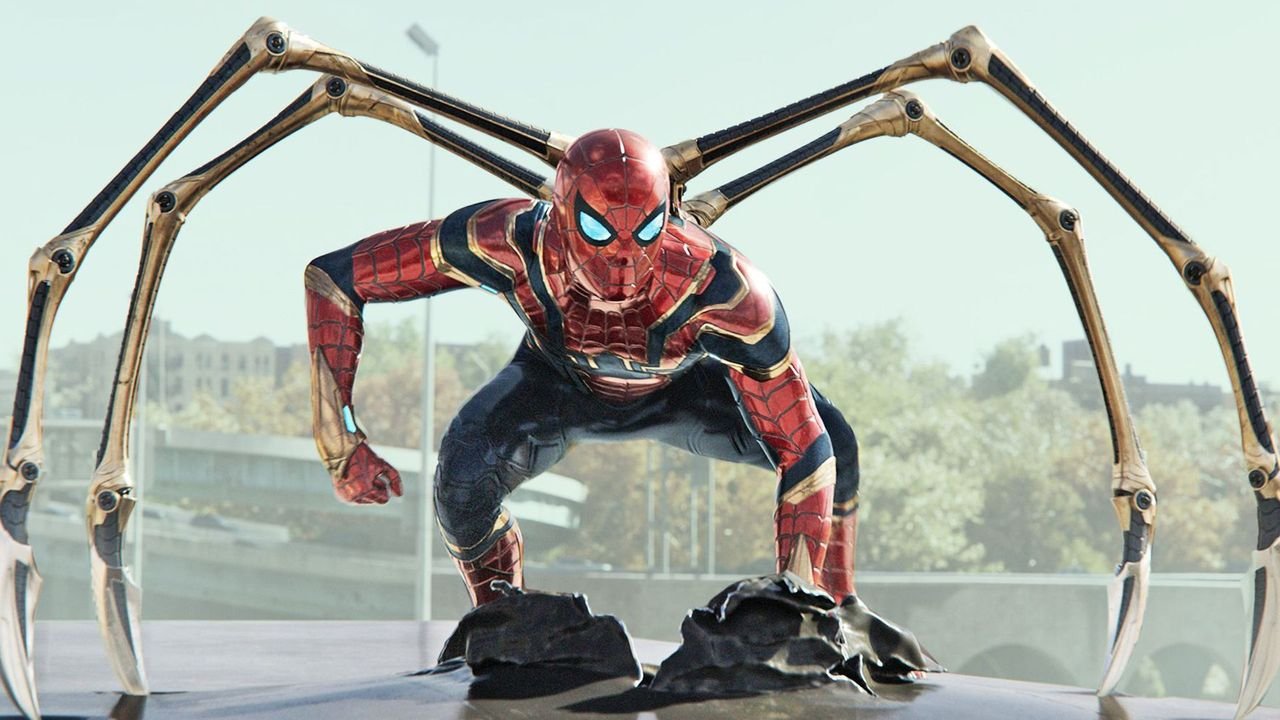
There are superhero movies you watch, enjoy, and forget after a few days. Then there are movies that somehow stay with you because they remind you why you loved movies in the first place. For me, Spider-Man: No Way Home belongs firmly in the second category.
When I first watched No Way Home, I already knew it was going to be a big movie. The trailers had created enormous expectations, the internet was full of theories, and practically everyone seemed to be talking about the possibility of seeing different Spider-Man characters together. But even with all those expectations, the movie still managed to surprise me.
And that is what makes my review of Spider-Man: No Way Home slightly different from simply saying, “It was a great superhero movie.”
It was more than that.
It was nostalgia, comedy, action, emotion, and years of Spider-Man history coming together in one story.
My First Impression of Spider-Man: No Way Home
Spider-Man: No Way Home continues the story of Peter Parker after his identity has been exposed to the entire world. Everyone now knows that Peter Parker is Spider-Man, and his normal life suddenly becomes almost impossible.
Peter turns to Doctor Strange for help. He wants everyone to forget that he is Spider-Man.
Simple, right?
Well, not exactly.
The spell goes wrong, and suddenly villains from different Spider-Man universes begin appearing in Peter’s world.
This is where the movie becomes something much bigger than a normal Spider-Man adventure.
We get villains connected to previous Spider-Man movies, including Doctor Octopus, Green Goblin, Electro, Sandman, and Lizard. Seeing these characters again was already exciting, but the movie had an even bigger surprise waiting.
And yes, I am talking about Tobey Maguire and Andrew Garfield.
For someone who grew up watching Spider-Man movies from different eras, seeing three generations of Spider-Man standing together was one of those cinema moments that is difficult to describe without simply saying, “You had to be there.”
The Nostalgia Is Powerful
One of the biggest strengths of No Way Home is the way it uses nostalgia.
But importantly, the movie doesn’t depend entirely on nostalgia.
There is a difference.
A bad nostalgia movie simply brings back old characters and expects the audience to clap. No Way Home does something better. It gives those characters a reason to be there.
When the older villains arrive, they aren’t just random cameos. Their stories become connected to Peter’s current situation.
And when Tobey Maguire’s Spider-Man appears, it feels like the return of a character many people had not seen in years.
Andrew Garfield’s return is particularly interesting because his version of Spider-Man had unfinished emotional business.
The movie gives these characters moments that feel like proper extensions of their previous stories.
That is something I really appreciated.
Tom Holland’s Spider-Man Finally Has to Grow Up
Tom Holland’s version of Peter Parker had always been presented as the younger, more inexperienced Spider-Man.
He was funny.
He was energetic.
He made mistakes.
He relied heavily on Tony Stark and other heroes.
But No Way Home changes that.
This is where Peter begins to understand what being Spider-Man actually means.
The biggest lesson of the movie is not about having superpowers. It is about responsibility.
Peter wants to fix everything. He believes that if he can save the villains instead of allowing them to die, he can prevent tragedy.
His intentions are good.
But his decisions have consequences.
That is something I liked about the movie because Peter isn’t presented as a perfect hero. He makes emotional decisions, sometimes makes things worse, and has to deal with the consequences.
That makes him feel human.
The Villains Are One of the Best Parts
Let’s talk about the villains.
Willem Dafoe as Green Goblin is absolutely terrifying.
Even years after his first appearance, Norman Osborn still has that unsettling quality. Dafoe doesn’t need to scream constantly or rely on special effects to make the character frightening. His facial expressions and voice alone can change the entire atmosphere of a scene.
And when the Green Goblin personality takes control, you know Peter is in serious trouble.
Then there is Doctor Octopus, played by Alfred Molina.
Doc Ock remains one of the most memorable Spider-Man villains ever created. His relationship with Peter is also interesting because he isn’t simply evil for the sake of being evil.
He is a brilliant scientist whose ambition eventually destroys him.
That makes his story more complicated.
Jamie Foxx’s Electro also receives a significant upgrade compared with his appearance in The Amazing Spider-Man 2. The character feels more confident and entertaining this time around.
The Sandman and Lizard complete the villain lineup, creating a group that feels almost impossible for one Spider-Man to handle alone.
Then Came the Moment Everyone Was Waiting For
Let’s be honest.
Most people watching No Way Home were waiting for one thing.
Where are the other Spider-Men?
When Tobey Maguire finally appears, the cinema reaction is unforgettable.
And when Andrew Garfield appears too, the whole thing becomes almost surreal.
I enjoyed this part because the movie doesn’t immediately turn into a competition between the three Spider-Men.
Instead, they talk.
They compare experiences.
They joke about their powers.
They discuss the people they’ve lost.
And suddenly, these three versions of Spider-Man feel like three different stages of the same character.
Tobey’s Spider-Man feels older and more experienced.
Andrew’s Peter carries emotional scars.
Tom’s Peter is still learning.
Put them together, and you get something surprisingly meaningful.
Andrew Garfield Deserved This Moment
If I had to choose one character who benefited the most from No Way Home, I would probably say Andrew Garfield’s Spider-Man.
His version of Peter Parker ended with a lot of unfinished emotions.
In The Amazing Spider-Man 2, Peter experiences one of the most painful moments in the character’s history.
No Way Home gives him another opportunity to confront that pain.
The scene involving MJ is one of the movie’s most satisfying moments.
Andrew’s Spider-Man gets the chance to prevent another Peter from experiencing the same failure he experienced.
That moment isn’t just fan service.
It is closure.
And honestly, I think Andrew Garfield was fantastic in this movie.
The Emotional Side Hit Harder Than I Expected
I went into No Way Home expecting action.
I expected jokes.
I expected Spider-Man swinging through New York.
I expected the multiverse madness.
What I didn’t expect was how emotional the movie would become.
The death of Aunt May changes everything.
Peter’s response to her death is painful because it represents the moment when his innocence finally disappears.
Then comes one of the most important lessons in the entire movie:
“With great power comes great responsibility.”
The phrase has been associated with Spider-Man for decades, but here it feels like the final piece of Peter’s transformation.
Peter finally understands that being Spider-Man isn’t about getting the perfect outcome.
Sometimes being Spider-Man means doing the right thing even when doing it hurts.
The Action Is Exactly What You Want
Of course, we can’t review a Spider-Man movie without talking about the action.
And No Way Home delivers.
The fight between Spider-Man and Doctor Octopus on the bridge is spectacular.
The battle involving all the villains is another major highlight.
But the final battle is where everything comes together.
Watching three Spider-Men fighting together against the villains is the kind of superhero spectacle that fans wait years to see.
The choreography is entertaining, the visual effects are impressive, and each Spider-Man gets an opportunity to feel useful.
I particularly enjoyed the way the three Spider-Men fight differently.
They don’t feel like identical characters wearing different suits.
Their movements reflect their individual experiences.
Tom Holland’s Best Spider-Man Performance
For me, No Way Home is arguably Tom Holland’s strongest performance as Peter Parker.
He gets to show much more emotional range.
We see Peter as a teenager who is overwhelmed by responsibility, anger, grief, guilt, and fear.
There are moments when he is genuinely broken.
And that makes the ending more powerful.
By the conclusion, Peter is no longer the same character we met at the beginning of the movie.
He has lost almost everything.
But he has also finally become Spider-Man in the fullest sense.
He doesn’t need Tony Stark’s technology.
He doesn’t need Doctor Strange.
He doesn’t need Avengers-level assistance.
He has himself.
And that is enough.
Why You Should Watch Spider-Man: No Way Home
If you have never watched Spider-Man: No Way Home, I strongly recommend giving it a chance.
But I would actually recommend watching the earlier Spider-Man movies first.
Watch Tobey Maguire’s Spider-Man trilogy.
Watch Andrew Garfield’s The Amazing Spider-Man movies.
Then watch Tom Holland’s Spider-Man appearances in the Marvel Cinematic Universe.
Why?
Because No Way Home rewards you for knowing that history.
You’ll understand the villains better.
You’ll appreciate the returning characters more.
You’ll understand the emotional weight behind some of the conversations.
And when certain characters appear, you won’t just see an actor walking onto the screen.
You’ll see a piece of your movie-watching history coming back.
My Final Verdict
For me, Spider-Man: No Way Home works because it manages to do two things at the same time.
It gives longtime Spider-Man fans the nostalgia they desperately wanted, while still telling a meaningful story about the current Peter Parker.
Is it perfect?
No.
There are moments where the plot becomes complicated, and some characters could have received more attention. The multiverse concept also creates a few questions that the movie doesn’t completely answer.
But honestly, those issues don’t take away much from the overall experience.
The movie succeeds where it matters most.
It makes you laugh.
It makes you excited.
It makes you nostalgic.
And, surprisingly, it makes you emotional.
For me, that is what a great superhero movie should do.
Spider-Man: No Way Home isn’t just a movie about three Spider-Men fighting villains. It is a celebration of Spider-Man’s history.
It reminds you that different versions of a character can mean different things to different generations.
Tobey Maguire’s Spider-Man represents one era.
Andrew Garfield represents another.
Tom Holland represents the current generation.
And somehow, No Way Home brings all three together without making any of them feel unnecessary.
That is the movie’s biggest achievement.
So, should you watch it?
Absolutely.
If you’re a Spider-Man fan, it is almost impossible to recommend skipping it. If you’re a Marvel fan, it is one of the most important MCU movies to watch. And if you simply enjoy good blockbuster entertainment, there is enough action, humour, emotion, and spectacle here to keep you entertained.
Just don’t make the mistake of watching it without knowing anything about the previous Spider-Man movies.
Because when that first big surprise happens, you want to understand exactly why everyone around you is suddenly screaming.
For me, Spider-Man: No Way Home is more than another superhero movie.
It is a love letter to Spider-Man fans.
And honestly, after watching it, I understood why so many people walked out of the cinema saying the same thing:
“This is the Spider-Man movie we didn’t know we needed.”
 James
James