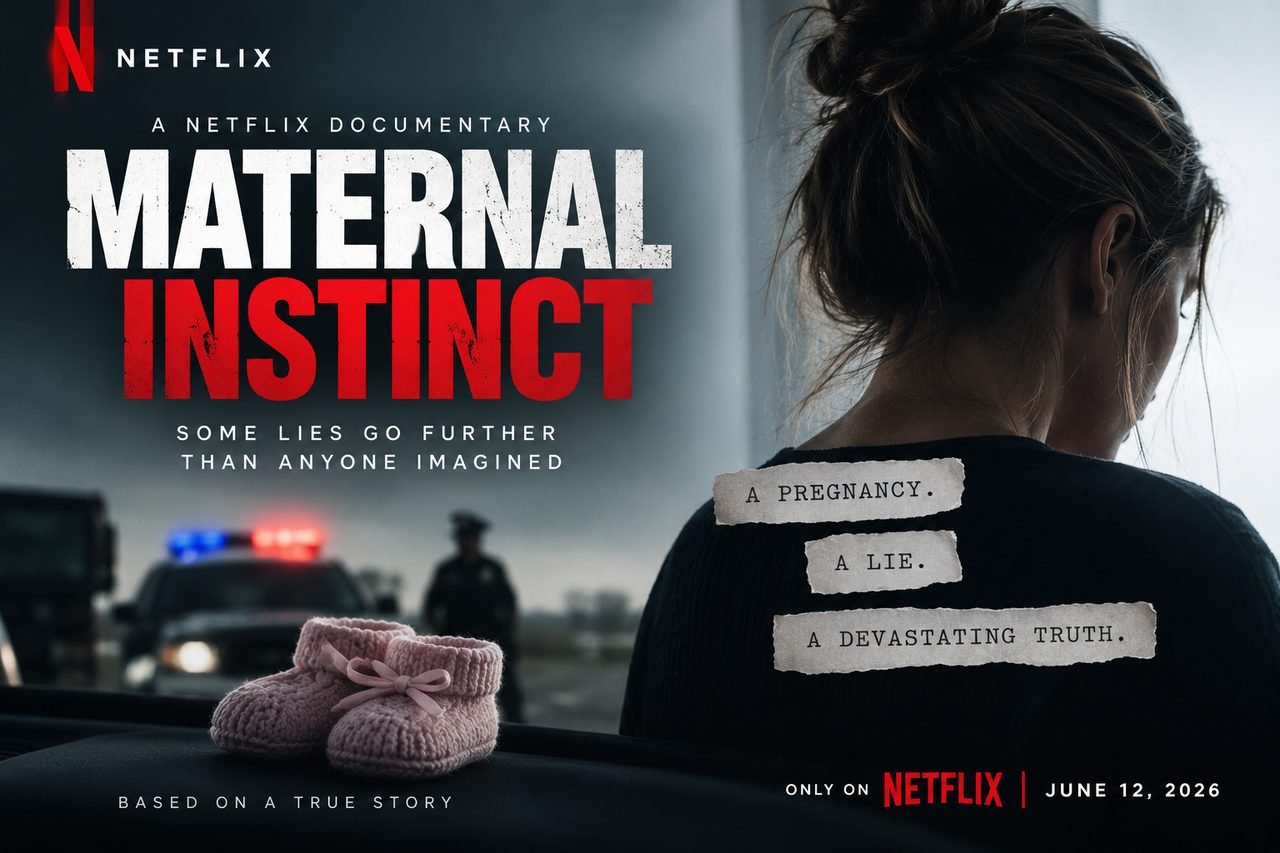
Some true-crime stories are difficult to believe even when you know they actually happened.
Maternal Instinct is one of those documentaries.
Now streaming on Netflix, the 2026 documentary tells the disturbing true story of Taylor Parker, a Texas woman whose elaborate lies about being pregnant eventually led to a horrifying criminal case.
The story begins in 2020 when a Texas state trooper stopped Parker after she was driving erratically.
She claimed that she had just given birth.
But something didn’t add up.
The baby wasn’t hers.
And neither was the blood.
From there, investigators uncovered a shocking chain of deception that would eventually reveal a much darker crime.
What Is Maternal Instinct About?
Maternal Instinct is a true-crime documentary directed by Jessica Dimmock.
Rather than simply focusing on the crime itself, the documentary looks at the years of deception that came before it.
Parker had convinced people around her that she was pregnant. She created an entire story around the pregnancy and maintained that story for a long time.
The documentary gradually shows how those lies became more complicated.
Then everything fell apart.
What initially looked like a strange situation involving a woman claiming to have given birth became an investigation into a horrific murder.
The Beginning Is What Pulled Me In
For me, the strongest part of the documentary is the opening.
You already know that something terrible happened, but the documentary doesn’t immediately give you every answer.
Instead, it starts with the traffic stop.
A police officer encounters a woman who claims she has just given birth.
But the circumstances don’t make sense.
That immediately creates questions.
Where is the baby?
Why is she covered in blood?
Why doesn’t her story add up?
And who is the baby actually connected to?
That approach works because you’re discovering the story alongside the investigation.
The Deception Is Almost Unbelievable
What makes the story particularly disturbing is how far the deception went.
This wasn’t simply someone telling one lie.
According to Netflix’s documentary description, Parker’s lies stretched into a much larger web of deception that eventually led to a devastating crime.
The documentary shows how people around her trusted what she was telling them.
That’s one of the things that makes the story so uncomfortable.
You keep asking yourself how nobody could have known.
But that’s also what makes true-crime stories like this so fascinating.
People don’t always behave the way we expect them to.
The Documentary Doesn’t Need to Manufacture Drama
One thing I appreciate about Maternal Instinct is that the real story is already dramatic enough.
There is no need for the documentary to create unnecessary suspense.
The facts themselves are shocking.
Interviews, investigation details, footage and the timeline gradually reveal what happened.
That makes the documentary feel more serious than some true-crime productions that spend too much time trying to make everything look like a Hollywood thriller.
Here, the story does most of the work.
The Human Side Is Difficult to Watch
This is not an easy documentary.
There are extremely disturbing elements involving the murder of a pregnant woman and her unborn child.
Netflix specifically warns viewers about graphic crime-scene imagery, violence and distressing details.
So I wouldn’t recommend this as casual background viewing.
You need to be prepared for some very difficult material.
What makes it even harder is that the victims weren’t simply characters in a crime story.
They were real people with families and people who loved them.
That reality stays with you while watching.
The Interviews Add Emotional Weight
The documentary benefits from hearing from people connected to the case.
Their perspectives help show what the deception looked like from the outside.
You get a better understanding of how Parker was able to maintain her story and how the people around her reacted when the truth began coming out.
That is important because otherwise the documentary could easily become just another collection of shocking crime details.
Instead, the human reactions give the story more weight.
What I Think Could Have Been Better
My biggest criticism is that the documentary sometimes feels like it is moving through information rather than deeply examining it.
The story is shocking enough to carry the film, but I wanted more insight into certain aspects of the case.
Why did the deception continue for so long?
How did Parker maintain her story?
What warning signs did people miss?
Could anything have been done differently?
The documentary touches on these questions, but I think there was room to go deeper.
Still, I understand the decision to keep the focus on the investigation and the victims rather than turning the documentary into a psychological profile.
The Ending Is Disturbing
I won’t spoil the entire ending if you haven’t watched it.
But by the time everything is revealed, the story becomes even more disturbing because you understand how much planning and deception surrounded the crime.
And there is something particularly chilling about watching a case that began with a seemingly strange traffic stop eventually reveal something so serious.
The documentary leaves you thinking about how many people were affected by one person’s lies.
Is Maternal Instinct Worth Watching?
If you’re a fan of true-crime documentaries, yes.
But this isn’t an easy recommendation because of the subject matter.
The documentary is disturbing, emotional and sometimes difficult to watch.
What makes it worth watching is the unbelievable nature of the case and the way the investigation gradually uncovers the truth.
Netflix currently lists it as a TV-MA true-crime documentary, and it runs for roughly 1 hour and 37 minutes.
It’s also performing well with critics. Rotten Tomatoes currently has it at 92% from critics and 82% from audiences, while IMDb lists it at 7.2/10.
My Rating for Maternal Instinct
For me, Maternal Instinct gets an 8/10.
The story is shocking, the investigation is fascinating and the documentary does a good job of gradually revealing what happened.
My main criticism is that I wanted it to go deeper into some of the unanswered psychological questions surrounding the case.
But overall, it is a compelling true-crime documentary.
Maternal Instinct is not a movie you watch for entertainment.
You watch it because you want to understand how a seemingly unbelievable chain of lies could eventually lead to such a devastating crime.
And when the full story comes together, it’s hard not to sit back and think:
How did this happen?

 James
James