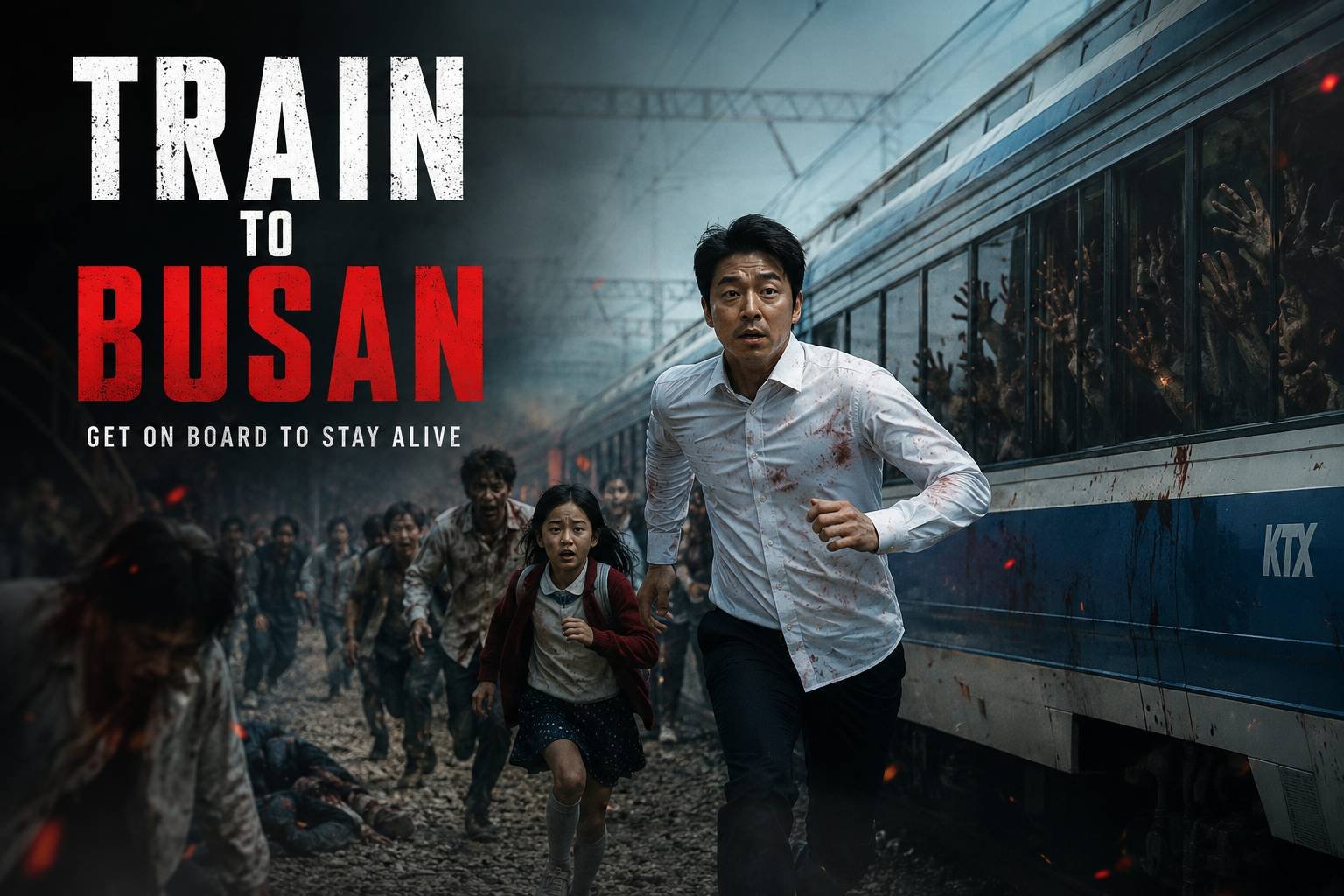
When most people think of zombie movies, they imagine endless action, blood, and monsters chasing people through empty streets. Train to Busan offers all of that, but it also tells a touching story about family, sacrifice, and humanity. It is more than just a horror film. It is an emotional ride that keeps you on the edge of your seat from beginning to end.

Released in 2016, Train to Busan became one of South Korea’s biggest movie successes. It received praise from both critics and audiences around the world and introduced many people to Korean cinema. Even years after its release, many fans still consider it one of the greatest zombie movies ever made.
If you have never watched it, or you want to know why it became so popular, here is everything you need to know about Train to Busan.
What Is Train to Busan About?
The story follows Seok-woo, a busy fund manager who rarely spends time with his young daughter, Su-an. After promising to take her to visit her mother in Busan for her birthday, they board the high-speed KTX train from Seoul.
What starts as a normal train journey quickly turns into a nightmare.
A young woman infected with a mysterious virus sneaks onto the train. Within minutes, she transforms into a fast, violent zombie. The infection spreads rapidly from one passenger to another, turning the train into a moving death trap.
As the train speeds toward Busan, the passengers must work together to survive while facing both the infected and selfish people who care only about saving themselves.
A Fresh Take on Zombie Movies

Many zombie films take place in cities or abandoned towns. Train to Busan does something different by placing almost the entire story on a speeding train.
The setting creates constant tension because there is almost nowhere to hide. Every train carriage becomes another dangerous obstacle. Characters have to move carefully through narrow spaces filled with infected passengers.
The moving train also means there is no easy escape. Every station offers hope, but many quickly become dangerous as the outbreak spreads across the country.
This unique setting makes the movie feel fresh even if you have watched many zombie films before.

Fast Zombies Make Every Second Count
One reason Train to Busan became so popular is its terrifying zombies.
Unlike the slow zombies seen in older horror movies, these infected people move incredibly fast. They sprint, jump, and attack without warning.
Their movements are unsettling because actors used body contortions and sudden jerky motions to make them look unnatural. The result is frightening and believable.
The virus also spreads almost instantly after someone is bitten, leaving survivors with very little time to react.
This fast pace keeps the tension high throughout the movie.
The Relationship Between Seok-woo and Su-an
At the heart of the film is the relationship between a father and his daughter.
Seok-woo is successful in business but has neglected his family because of work. Su-an loves her father but wishes he spent more time with her.
As the zombie outbreak grows worse, Seok-woo slowly changes. He learns that protecting the people he loves matters more than money or career success.
Their emotional journey gives the movie real heart and makes viewers care deeply about what happens to them.
Memorable Characters
One of the movie’s greatest strengths is its cast.
Each passenger feels like a real person with different strengths and weaknesses.
Some characters quickly become fan favorites because of their bravery, kindness, and willingness to help strangers.
Others show how fear and selfishness can bring out the worst in people during a crisis.
This mix of personalities creates emotional moments that stay with viewers long after the credits roll.
Action That Never Slows Down
The action begins early and rarely lets up.
Passengers fight through train cars using whatever they can find, including bats, shields, luggage, and even their own bodies.
One unforgettable sequence happens when survivors must cross several train compartments packed with zombies while the train passes through dark tunnels.

The clever use of light and darkness creates suspense that keeps viewers glued to the screen.
Rather than relying only on special effects, the movie uses practical stunts, choreography, and creative camera work to make every action scene feel intense.

Themes That Make the Movie Special
While Train to Busan is filled with horror and action, it also tells a meaningful story.
Family Comes First
The movie reminds us that family is worth protecting, even during impossible situations.
Sacrifice
Several characters risk everything to save others, showing that courage often means putting someone else’s life before your own.
Greed and Selfishness
Not everyone acts like a hero.
Some passengers think only about themselves, making dangerous decisions that put everyone else at risk.
The movie suggests that selfishness can be just as deadly as the zombies.
Hope
Even in the darkest moments, the film never completely loses hope.
That balance between fear and hope makes the emotional scenes even stronger.
Outstanding Performances
The cast delivers performances that feel natural and believable.
Gong Yoo shines as Seok-woo, portraying a father who slowly becomes more caring and selfless.
Kim Su-an gives an emotional performance as Su-an, making audiences genuinely care about her safety.
Ma Dong-seok steals many scenes as Sang-hwa, a strong and fearless husband who protects others with both his fists and his heart.
The chemistry between the actors helps make every emotional moment believable.
Excellent Direction
Director Yeon Sang-ho was already known for animation before making Train to Busan.
His attention to pacing keeps the movie moving without feeling rushed.
Every action scene has a purpose, and every emotional moment feels earned.
The movie balances horror, drama, suspense, and action in a way that keeps audiences engaged from beginning to end.
Visual Effects
The movie does not depend entirely on computer-generated effects.
Most zombie movements come from talented stunt performers and actors.
Combined with realistic makeup, practical effects, and smart cinematography, the infected look frightening without appearing fake.
The train itself also becomes an important visual element.
Its narrow hallways, glass doors, and crowded compartments constantly remind viewers that there is very little room to escape.
Why Train to Busan Became a Global Hit
The film became popular worldwide for several reasons.
- It tells a simple story that anyone can understand.
- The emotional moments are just as powerful as the action.
- The zombies are genuinely frightening.
- The train setting feels original.
- The pacing rarely slows down.
- The characters feel realistic.
- The ending leaves a lasting emotional impact.
Because of these strengths, many people who normally avoid zombie movies still enjoy Train to Busan.
Awards and Success
Train to Busan premiered at the 2016 Cannes Film Festival in the Midnight Screenings section, introducing it to international audiences.
It became one of South Korea’s highest-grossing films of the year and sold more than 11 million tickets in its home country.
The movie also received numerous awards for its direction, performances, and technical achievements.
Its worldwide success helped bring more attention to Korean films and television years before shows like Squid Game became global sensations.
Sequel: Peninsula

In 2020, director Yeon Sang-ho released Peninsula, a standalone sequel set four years after the events of Train to Busan.
Instead of focusing on a train, Peninsula follows survivors returning to the zombie-infested Korean peninsula on a dangerous mission.
The sequel features larger action scenes, armored vehicles, explosions, and military-style combat.

Although many fans enjoyed its action, others felt it lacked the emotional depth that made Train to Busan so memorable.
Interesting Facts About Train to Busan
- The movie takes place mostly on a real Korean KTX high-speed train.
- Director Yeon Sang-ho previously made the animated zombie film Seoul Station, which serves as a prequel.
- The actors performed many physically demanding scenes during filming.
- The zombies were created using practical performances combined with makeup rather than relying heavily on CGI.
- The film introduced many international viewers to Korean zombie cinema.
Is Train to Busan Scary?
Yes, but it is not scary only because of the zombies.
The fear comes from uncertainty.
You never know who will survive, who will become infected, or what danger waits in the next train carriage.
The emotional scenes are just as powerful as the horror, making the movie unforgettable.
If you enjoy fast-paced thrillers with meaningful characters, this film is an excellent choice.
Should You Watch Train to Busan?
Absolutely.
Whether you are a longtime zombie fan or someone who rarely watches horror movies, Train to Busan offers something special.
It combines thrilling action, emotional storytelling, memorable characters, and impressive filmmaking into one unforgettable experience.
Instead of focusing only on monsters, it reminds viewers that kindness, courage, and love matter even during the worst situations.
More than a decade after its release, Train to Busan remains one of the finest zombie movies ever made. Its mix of suspense, emotion, and heart makes it easy to recommend, and it continues to set the standard for modern zombie films. If you are looking for a movie that will keep you entertained while also making you care deeply about its characters, Train to Busan deserves a place at the top of your watchlist.

 James
James